Six kinds of electrical work

This is the whole list. If the fault is electrical, it belongs to one of these six — and each one starts with a test, not a part.

Electrical diagnostics — technical illustration

01 / 06

Electrical diagnostics

Find the fault instead of hunting it

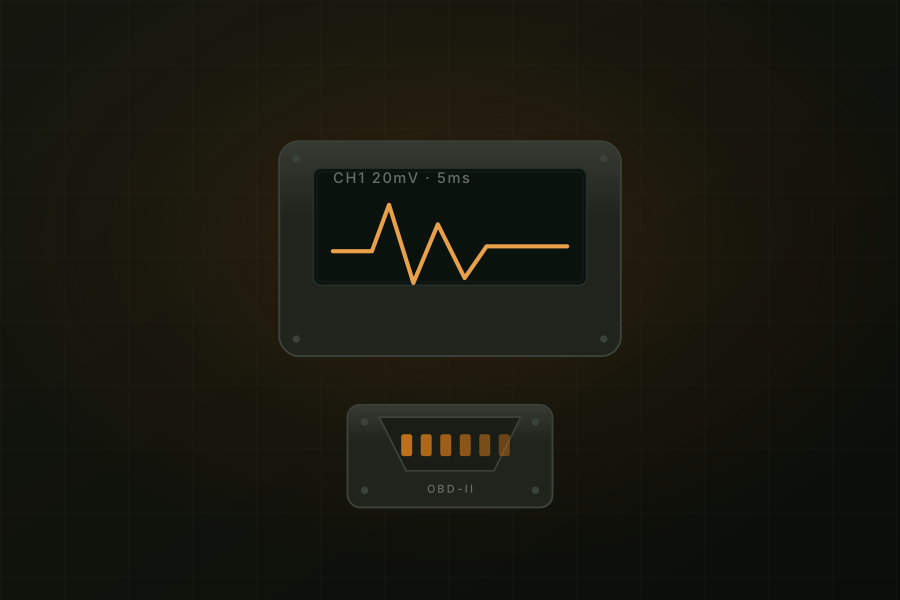
Electrical faults rarely announce themselves. A parasitic drain can flatten a battery overnight and leave no code behind; a module can drop off the network only when the cabin is warm. Diagnostics here means a written test plan, a meter and the wiring diagram for your vehicle — not a scanner that reads codes and a guess that follows.

  • Parasitic battery drain measured and traced to a circuit
  • No-start and no-crank faults traced through the start circuit
  • Voltage-drop tests on feeds, grounds and connectors
  • Intermittent faults caught with logging and road tests
  • Module communication faults (CAN and LIN) checked at the connector
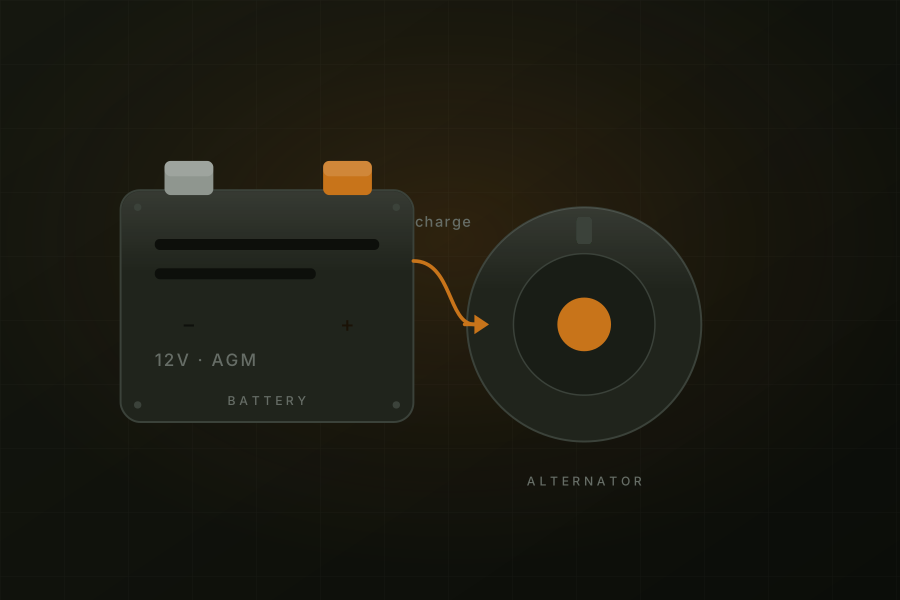
Starting and charging — technical illustration

02 / 06

Starting and charging

The chain from key to alternator

A car that will not crank is not automatically a car that needs a starter. The battery, the terminals, the cables, the grounds, the ignition switch, the relay and the starter all sit in the same chain, and the cheapest way to fix it is to test the chain from end to end.

  • Battery condition, state of charge and load testing
  • Terminals, cables and grounds cleaned and repaired
  • Starter circuit tested under load before replacement
  • Alternator output, ripple and charge warning circuits
  • Fusible links and main fuses checked and renewed
Wiring and connectors — technical illustration

03 / 06

Wiring and connectors

Repairs that outlast the car

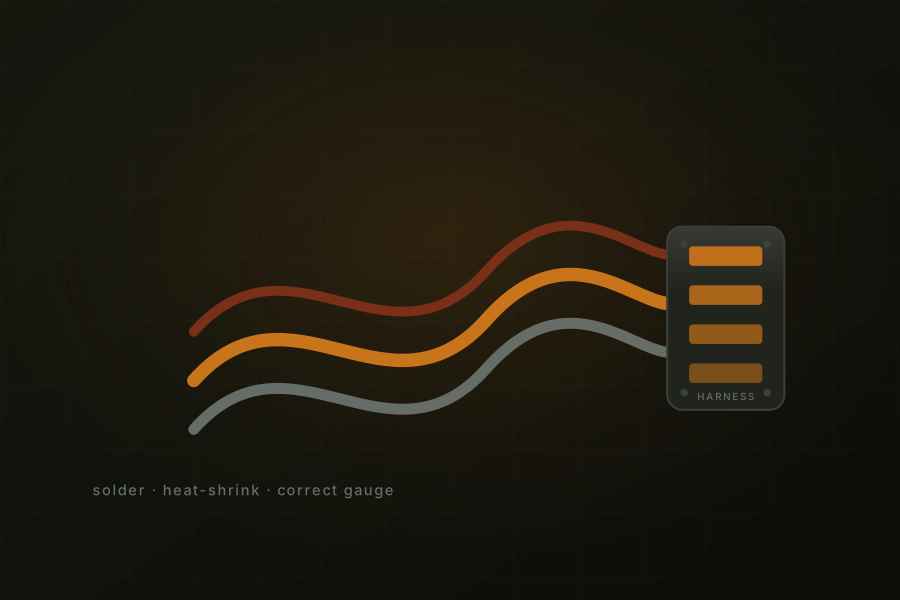
Old harnesses fail at the places nobody looks: behind the kick panel, under the battery tray, at the hinge of a tailgate. And a previous repair with a twist-and-tape splice is its own fault. Wiring is repaired with solder, heat-shrink and the correct gauge, and the repair is documented.

  • Harness repair, splice replacement and section renewal
  • Corroded pins and connectors repinned rather than bypassed
  • Water ingress, chafing and rodent damage repaired
  • Trailer plugs and towing wiring fitted and tested
  • Previous repairs removed and redone properly
Lighting and signals — technical illustration

04 / 06

Lighting and signals

Every lamp, every switch

Lighting faults are usually the easiest thing on a vehicle to diagnose properly and the easiest to bodge. Headlights, tail, brake, reverse, marker and dash illumination are traced lamp by lamp, and the switch, relay and ground that feed them are tested too.

  • Headlight, tail and brake light faults traced
  • Turn signals, hazards and flasher units
  • Dash and interior illumination
  • LED conversions, load resistors and flicker fixes
  • Switches, relays, fuses and grounds renewed
Power accessories — technical illustration

05 / 06

Power accessories

Windows, locks, seats, wipers

Motors, switches and the wiring between them are what make power accessories work — and the wiring is usually the part that fails first. Window regulators, lock actuators, seat motors, mirrors, wipers, horns, radios, cameras and dash accessories are tested and repaired as electrical systems.

  • Window regulators, motors and switches
  • Central locking and keyless entry faults
  • Seat, mirror and steering column electrics
  • Wipers, washers and horns
  • Radio, camera, dash camera and accessory wiring
Climate electrics — technical illustration

06 / 06

Climate electrics

The electrical side of heat and cold

Air conditioning that blows warm is not always empty of refrigerant. Blower motors, resistors, compressor clutches, blend-door actuators and control panels are all electrical, and each one fails in its own way. The electrical side is tested before the system is touched.

  • Blower motors, resistors and controls
  • Compressor clutch circuits and pressure switches
  • Blend-door and mode-door actuators
  • Climate control panels and sensors
  • Heated seats, mirrors and rear window grids

Not sure which one you need?

Describe the symptom and we will tell you what to test first — that is what the diagnostic is for.

Est. 2009 · 1925 Galleon Drive, Naples, FL 34102

Book the diagnostic

Call +1 (239) 536-2996 or write to info@autoangel.top with the vehicle and the symptom.